
No bus, no choice: why Shepton Mallet needs a fair deal on transport
Shepton Mallet is there for the villages. The buses aren’t. Most services stop around 7pm and only one route runs on a Sunday. I’m calling for a Bus Summit in Shepton Mallet to bring the people who can fix it into one room.
A bus timetable decides more than when you can travel. It shapes which college course a young person can take and which job someone can accept. It decides whether an older resident gets home from an evening appointment, and whether a family can get out on a Sunday. In Shepton Mallet and the villages around it, those choices are being narrowed every day, and not because people lack ambition or need. The bus simply isn’t there.
I’m often asked what I’m doing about it. Here is the answer.
What I’ve done so far
Buses have been a priority for me this year:
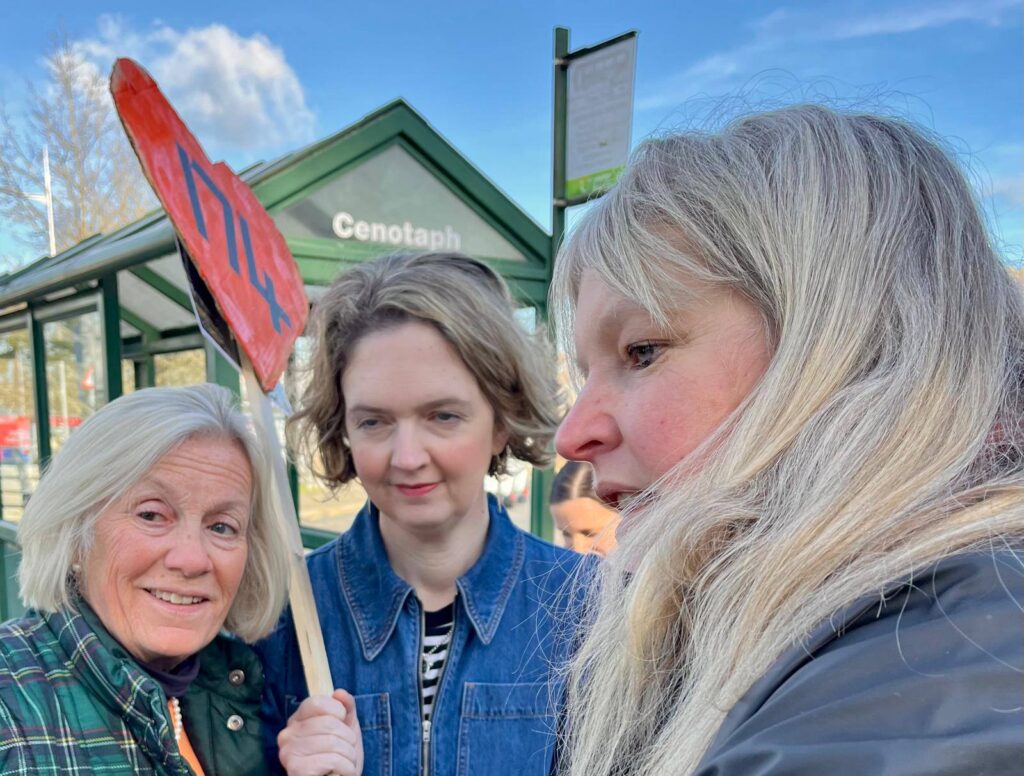
- February: First Bus withdrew the 174’s early-evening service without reasonable notice. Working with residents and our wonderful bus users’ group, I organised a petition and a protest, and we held talks with Somerset Council and our MPs. First Bus reversed the cuts.
- March: a student raised a concern about the new 174 timetable, which got students to school far too early. I took it up, and the timetable was adjusted again.
- Spring: I made the case for including Glastonbury TrainLink in Somerset’s Local Transport Delivery Plan, and for a Pilton rail link to be given fair consideration via Shepton Mallet.
- This autumn: I’ve called for a Bus Summit in Shepton Mallet, and I’m asking Somerset Council how its Local Transport Delivery Plan will deal with the issues that Shepton Mallet Town Council and I have raised.
Those wins show that when we speak up together as a community, decision-makers listen. Now we need to go further than defending what we have.
Supporting the Town Council’s case
I am backing Shepton Mallet Town Council’s work to close the gap in local transport provision. I helped while the report was being written, but the credit belongs to Cllr Simon Edwards, who pulled it together. Shepton Mallet on the Move is a thorough, carefully sourced piece of work, and it deserves a proper answer from Somerset Council. You can read it here.
Why I’m concerned
Shepton Mallet is officially a principal market town. Its retail park serves around 59,000 people, almost six times the town’s population. The community hospital and Urgent Treatment Centre serve the town and the surrounding villages. Shepton Mallet is the hub for around 27,800 people across 20 parishes. The Bath & West Showground brings in between half a million and a million visitors a year.
The bus service doesn’t reflect any of that. Most buses stop around 7pm. On Sundays only one route runs. There is no direct bus to Bristol and no bus interchange. Taunton and Yeovil are effectively out of reach without a car.
Wells is five miles away, a similar size, and in the same travel-to-work area. It has an hourly Bristol service seven days a week, evening buses and a bus station. Getting from Wells to Bristol by bus takes about 1 hour 10 minutes. From Shepton Mallet it takes at least 2 hours 15 minutes, with a long wait at Wells. I’m not arguing that Wells should lose anything. I’m arguing that Shepton should get its fair share.
The villages I represent feel this even more. For many residents without a car, the bus only works in the daytime, if at all. There’s nothing in the evenings and nothing on a Sunday.
The report finds that residents there without a car can reach town “only in weekday daytime hours, at best”. Pilton has the 669, which runs Monday to Saturday on a mainly school-day timetable. The last bus back from Street reaches Shepton at about 6:20pm, and there is no Sunday service.
For villages that rely on Somerset Council’s Slinky service, it only runs on weekdays, 9am to 5pm, must be booked a day ahead, and may only reach Shepton Mallet on one or two days a week. From Stoke St Michael, for example, Slinky reaches Shepton Mallet only on Tuesdays or Fridays, depending on which pickup area you’re in.
More than half of Shepton Mallet households have no car or only one. For older residents, a bus pass is of little use when the pass doesn’t start until 9:30am and there are barely any buses in the evening or on a Sunday. The Urgent Treatment Centre is open until 9pm, but from most of the surrounding villages the last bus home leaves hours earlier.
What this means for young people
This is the part that worries me most. Whitstone School has no sixth form, so almost every young person who wants to stay in education has to travel. Research with 1,660 young people across the area found that 97% feel there isn’t enough to do locally, with transport one of the biggest barriers. For older teenagers in the villages, it’s the single biggest one. One young person put it plainly: “The local transport system is DIRE.”
The Children’s Commissioner has just named Somerset the 11th hardest place in England to grow up. Where a young person can study, work or spend their free time shouldn’t depend on a bus timetable that ends at teatime.
What I’m asking for
- A Bus Summit in Shepton Mallet. I have called for a summit, led by Shepton Mallet Town Council, that brings the people who make the decisions into one room. That means town and parish councils, further education providers, health services and Somerset Council. Transport problems here cut across all of their responsibilities, so the answers need all of them at the table.
- A formal response to the Town Council’s report. It was sent to Somerset Council and has not yet had a reply.
- A clear explanation of how transport investment is decided. The Executive has confirmed that money is going to Wells. The emerging car parking strategy is meant to be consistent and fair across towns, and the same principles should apply to transport. I want to see how Shepton Mallet and the wider Bath & West area were assessed alongside other towns.
- Shepton Mallet in the 2027/28 Local Transport Delivery Plan. The Town Council’s report shows some fixes are cost effective. Moving the first morning bus to Wells earlier would let Shepton commuters catch the same Bristol bus as Wells residents, for an estimated £15,000–£25,000 a year. Evening buses until 9pm and a proper Sunday service are also among its priorities.
I’ll keep pressing on this at Somerset Council. If poor bus links have affected you or your family, please get in touch or comment below. Real experiences strengthen the case.
Cllr Claire Sully, Associate Lead Member for Community Resilience, Mendip South, Somerset Council
“