
A people’s path, in pieces, while determined as a train on the track to be a Somerset Circle.
Have you ever wondered why the Strawberry Line appears in parts of Mid-Somerset in fragments — stops and starts, interrupted with gaps of busy roads? The answer is a history lesson, and a story of remarkable persistence spanning many decades.
Recently I attended a packed meeting of the Pilton Village History Group, where Richard Jones — former trustee of the Strawberry Line Society and currently a volunteer coordinator — gave a brilliant and fascinating talk: “The Strawberry Line: from the steam age to its rebirth as a greenway.” It brought home just how long and hard this journey has been, and how much it has depended on individuals who have devoted a lifetime to this cause.
The Strawberry Line takes its name from the old Cheddar Valley railway line, which carried passengers and strawberries from the farms of Somerset to markets across the country until its closure in the late 1960s. Today, that same route is being brought back to life — not by steam, but by communities with a mission to connect to nature and with each other.
A path built in pieces
The North Somerset section was completed in the 1980s. Axbridge to Cheddar followed in the early 1990s. But the path from Cheddar to Wells and Shepton Mallet has been much discussed and long delayed — a case of enjoy in parts but do “mind the gap”. And local people do mind the gaps, as I was reminded in my local pub a couple of days ago when a friend, Sarah, said she was considering campaigning to make access easier for local villages in Croscombe. This sentiment echoes the Strawberry Line community of campaigners and volunteers and it’s exactly why people support the Strawberry Line.
Progress has not come easily or quickly. The planning application for the Dulcote extension to the Strawberry Line from Wells was approved in 2020, following decades of the previous council, which was run by a different ruling group, frustrating plans. More recently, Somerset Council awarded the Strawberry Line a grant of £730,000 to help complete missing links in the walking and cycling network in rural areas — which shows a clear difference in political direction with a different ruling group at the reins. What has changed? I believe more community-minded decision makers at local councils and the county council understand how important active travel is to those they represent.
The Somerset Circle Discovery Ride
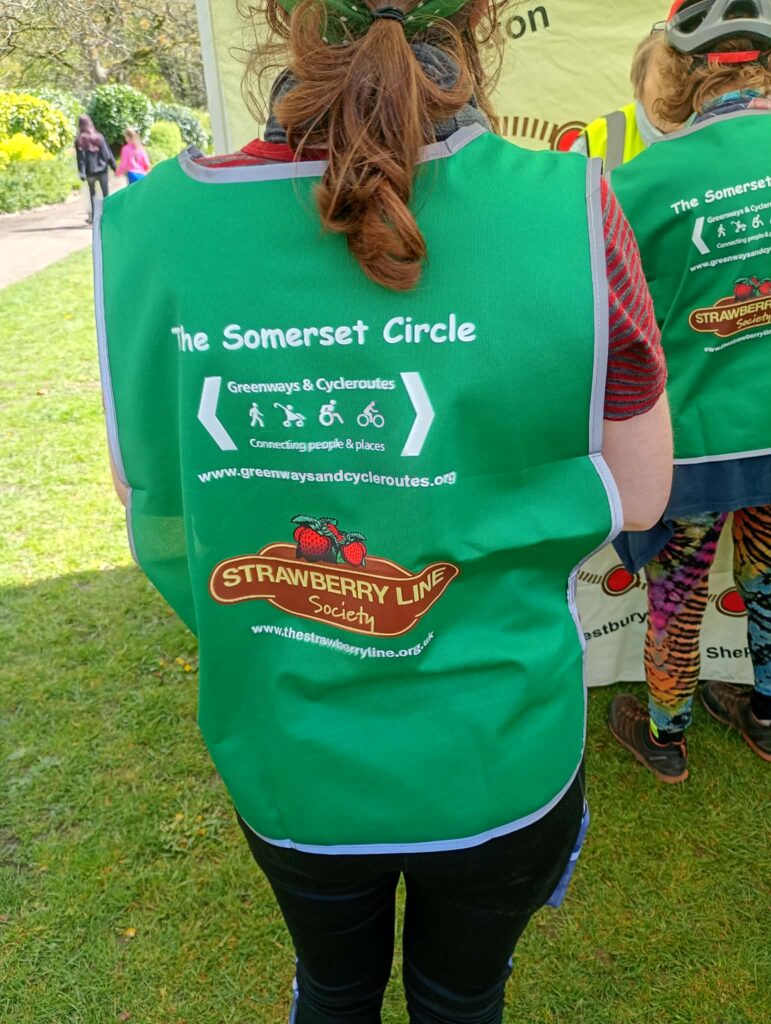
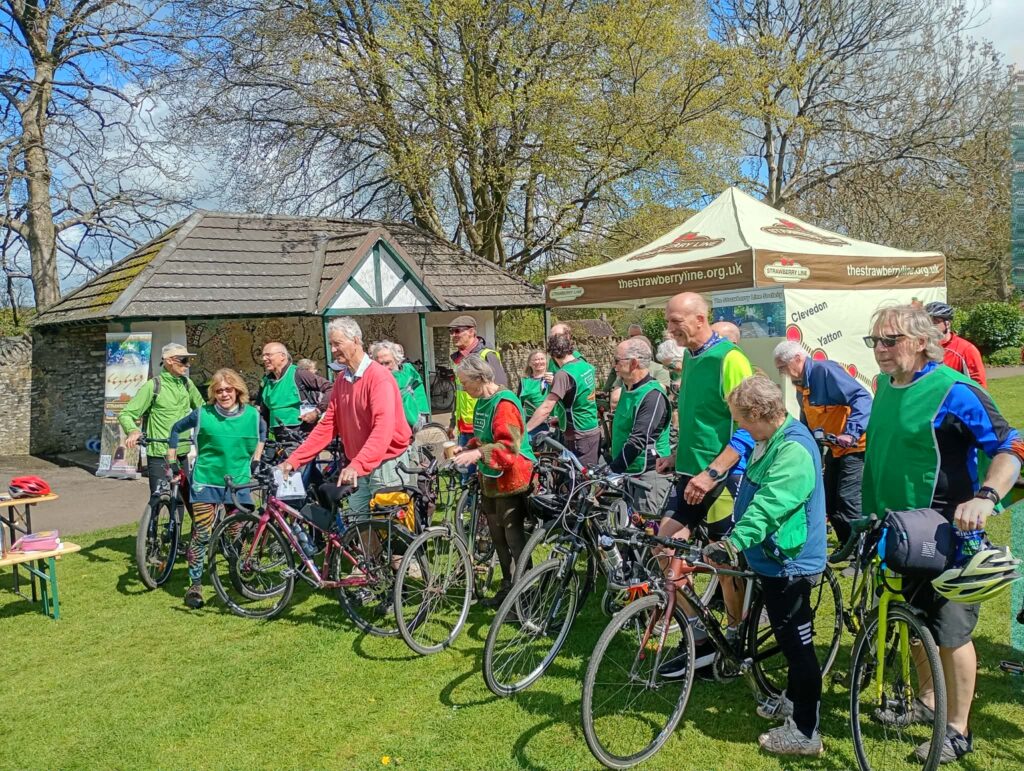
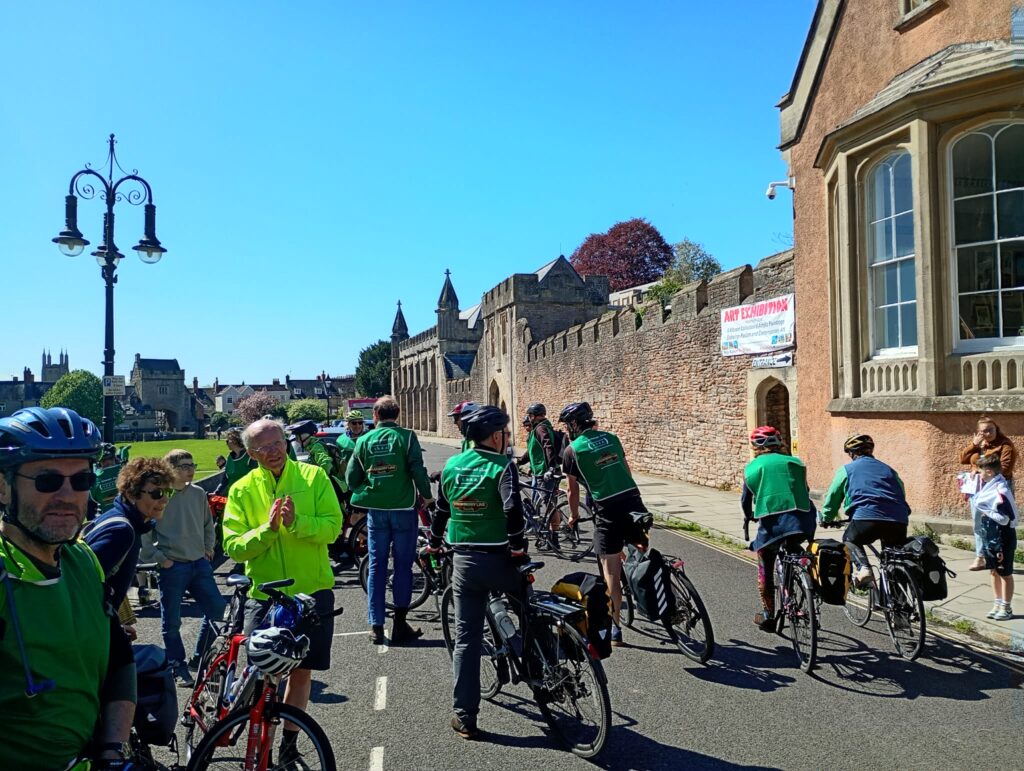
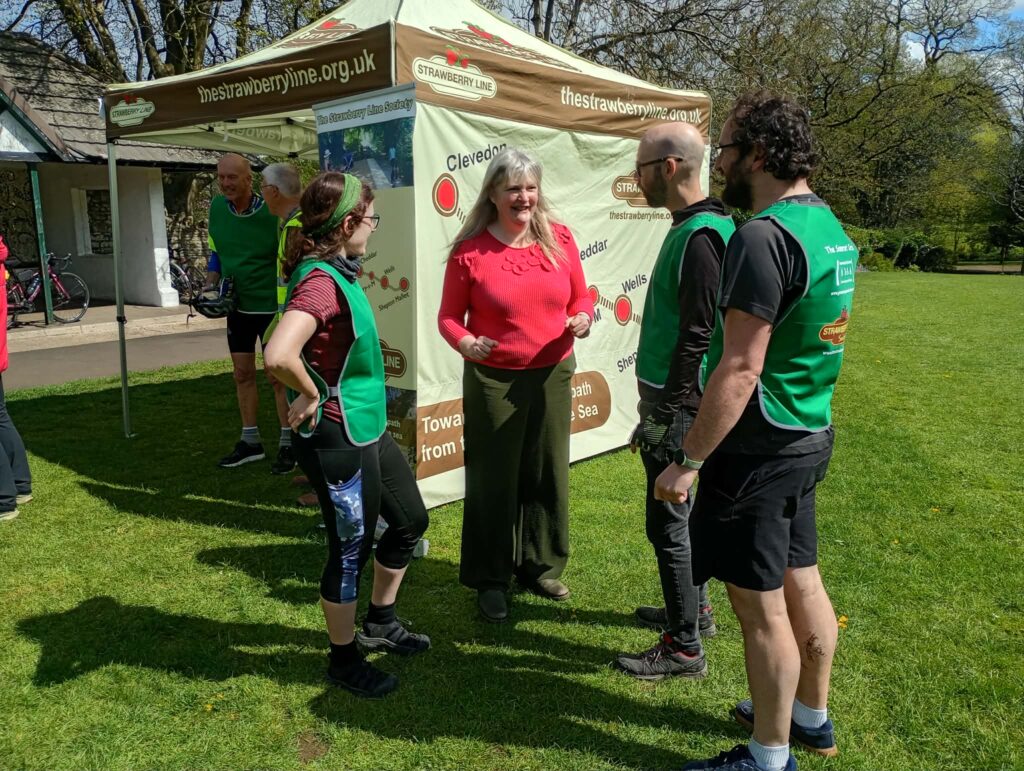
On the 18th and 19th of April 2026, cyclists set off on the Somerset Circle Discovery Ride — a two-day, 150km (around 93 miles) ride organised precisely to highlight both the triumphs and the tribulations of making a Somerset Circle, encompassing the Strawberry Line, a reality.
I joined local people and dignitaries at Collett Park in Shepton Mallet and in front of Wells Cathedral, including Tessa Munt MP, Cllr Ros Wyke, Somerset Council’s Associate Lead Member for Active Travel, Somerset Council’s Lead Member for Transformation, the Mayor of Wells, local councillors, and volunteers. As Somerset Councillor for Mendip South — and someone whose work is rooted in building stronger communities across the county — I was proud to be among them.
The Somerset Circle
The Somerset Circle is an 88-mile, mostly traffic-free circuit linking Bristol, Bath, the Mendip Hills, the Somerset Levels, and the coast. Over two thirds — around 50 miles — is already complete. The Strawberry Line will play a vital role in completing it, running from the former Cheddar Valley railway line and transformed into a greenway for walkers, cyclists, wheelchair users, and equestrians. The longest continuous stretch currently runs from Yatton to Cheddar, with the ambition to one day connect Shepton Mallet to Clevedon.
Hard won, every step
This has taken genuine partnership and collaboration. The new Somerset Unitary Authority (Somerset Council) has backed active travel with both funding and leadership. And Greenways and Cycleroutes — a volunteer-led charitable organisation — brings expertise, a can-do spirit, and a talent for collaboration, embedding within local communities and running work camps alongside volunteers and community leaders to plan, negotiate, and build. Recent milestones include the Windsor Hill tunnels and Ham Wood viaduct, a new bridge over the Cheddar Yeo opened November 2025, and extensions to Wells to Dulcote Quarry.
When will the gaps be closed?
People are asking: when can we ride, walk, horse ride, and wheel any part of the circuit without a drive? Closing the gaps requires landowner negotiations, field studies, planning, and construction — and it takes years. Progress is real, but it is hard won.
It matters to keep the momentum going
As I was drafting this article, Les pulled up on his mobility scooter. I asked him what the Strawberry Line path means to him. “I love the Dulcote section,” he told me. “I can travel through nature there, and I’m getting to know the people who come out to walk and exercise regularly.” Les is a widower, and those chance encounters to chat matter deeply to him. Before he finds that tranquillity, he has to navigate the busy A371 between Croscombe and Dulcote on his mobility scooter. That is a gap we don’t need, and why we need to close it.
Useful Links:
www.greenwaysandcycleroutes.org
www.thestrawberryline.org.uk/join
Friends of Windsor Hill: @WindsorHillTunnels
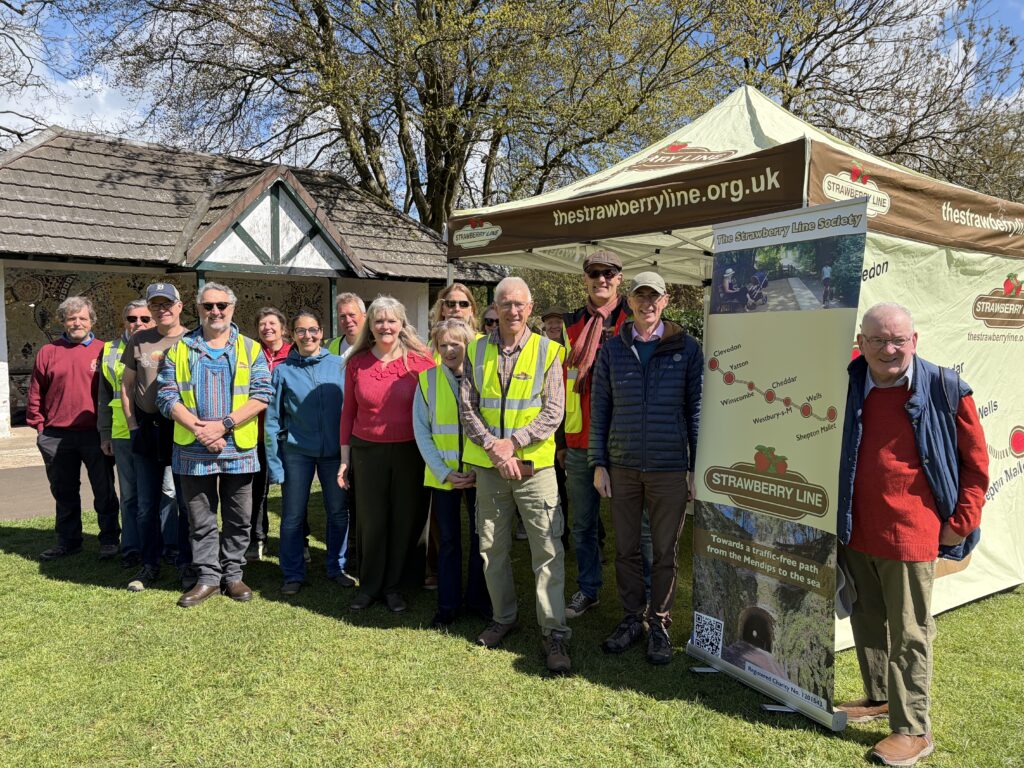
Richard stood down as a Trustee some time ago. But he’s still very knowledgeable about the SL and Somerset Circle.
Thank you for pointing this out. I will update now.